


When your back hurts in the lumbar region, discomfort of varying strength and character appears.The cause may be muscle fatigue, but most often lower back pain is the first signal of a serious illness.
Regardless of the duration and intensity of the symptom, the pathological condition is a reason to consult a doctor.A medical specialist will carry out a thorough diagnosis of the spine and abdominal organs, after which he will prescribe an effective treatment for the back.
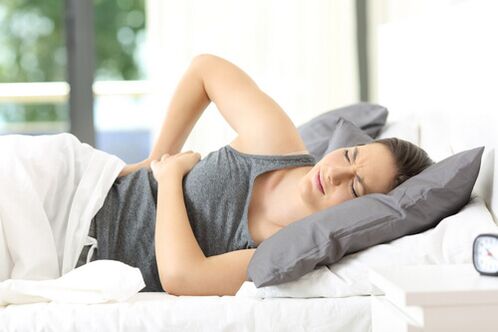
In the article, we will tell you in detail about all the causes of pain in the lower back, what each type of pain means (strong, sharp, etc.), when to go to the doctor, how to treat it (pills, injections, ointments, patches), photos.I promise it will be interesting.
Reasons
According to statistics, more than 85% of the world's population has had lower back pain.This fact is due to the heavy loads that the lumbar vertebrae experience every day.In a standing position, the pressure on the intervertebral discs is about 100 kg;in a horizontal position, the load decreases to 50 kg, and in case of impaired posture it reaches 220 kg.
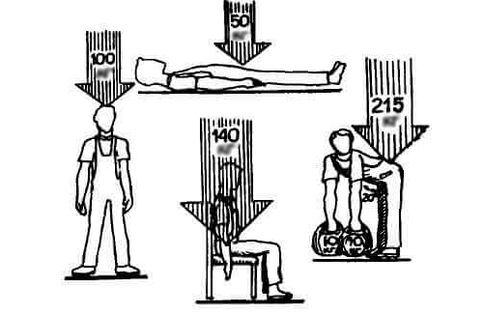
Sometimes the cause of pain in the lower back is excessive load or prolonged stay in an unusual position.The main characteristic of such pain is the absence of accompanying manifestations such as worsening of the general condition, hyperthermia, spread of the pain reaction to neighboring parts of the body.
In most cases, pain indicates a pathological process that can affect not only the spine, but also internal organs.The main causes of lower back pain include:
- osteochondrosis;
- old injuries;
- pancreatitis;
- sciatica;
- infections (tuberculosis, brucellosis);
- malignant neoplasms and their metastases;
- curvature of the spine - scoliosis, increased lumbar lordosis or thoracic kyphosis;
- kidney pathologies - pyelonephritis, kidney stones;
- Reiter's syndrome;
- spondylolisthesis;
- abscess in the epidural area;
- rheumatoid arthritis;
- intervertebral hernia.
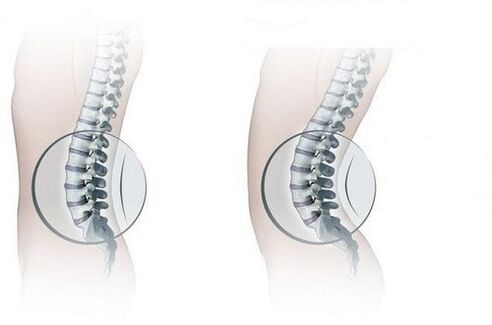
Among the atypical factors that provoke a painful reaction are diseases of the intestines or the genitourinary system.
In women
Due to physiological features and hormonal fluctuations, back pain in the fairer sex has a number of specific causes:
- adnexitis (inflammation of the ovaries);
- ectopic pregnancy;
- proliferation of endometrial cells (endometriosis).
Many women experience pain in the lower back during menstruation, as well as with inflammatory processes of the pelvic organs.Hormonal changes during menopause lead to the washing out of calcium and disruption of the mineral composition of bone tissue, leading to the development of osteoporosis.
Along with the femur and pelvic bones, the vertebrae are also affected by osteoporosis, which threatens with a pathological fracture of the spine even with minor trauma.
In men
Due to the nature of their work, men more often experience heavy physical exertion, which leads to premature wear of the lumbar vertebrae.Excessive tension gradually causes morphological changes in the cartilage discs, which explains the frequent formation of a hernial protrusion in men.The main manifestation of a hernia in the lower back is acute pain in the lumbar region in the form of lumbago.
Distinctive causes of pain in men are:
- ankylosing spondylitis;
- spondylolisthesis - slipping of the vertebrae relative to each other;
- pinched sciatic nerve;
- inflammatory process of the prostate gland.
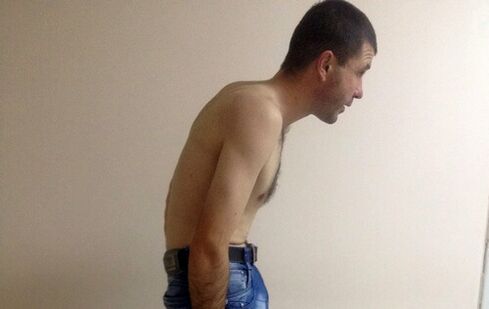
The negative influence of stress and a sedentary lifestyle cannot be ruled out.The lack of sufficient physical activity leads to impaired nutrition and gas exchange of the spinal tissues.As a result, metabolic processes are disturbed, which leads to irreversible changes that cause pain.
Classification of pain
Based on the nature, intensity, duration and cause of occurrence, the pain symptom is divided into several types.
- If the discomfort bothers the patient for no more than a month and a half, the pain is considered acute.
- The duration of the syndrome from 6 weeks to a year is diagnosed as a subacute condition.
- The pain syndrome becomes chronic if its duration is more than one year.
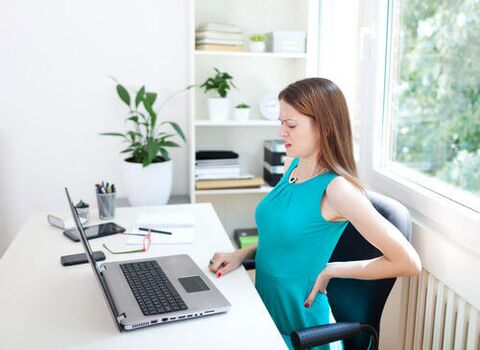
Depending on the location, there are 3 types of back pain:
- Local - appear at the site of the lesion, most often after an injury to the muscles of the back, tendons or bones.
- Reflected - are a consequence of somatic pathologies, when in diseases of the gastrointestinal tract (pancreatitis, stomach ulcers) pain is felt in the lower back.
- Predicted - a reaction of a neurogenic nature, when the pain impulse spreads to parts of the body along the nerve trunk.An example of this is sciatic nerve pinch pain that radiates down the entire leg.
The nature of the pain varies from aching and slight to sharp and impulsive.This characteristic depends on the disease that is the main cause of the symptom.
Strong
Severe pain occurs when the pain receptors in the paravertebral tissues are irritated or when there is a compressive effect on the large nerve trunks of the spinal cord.One of the main causes of severe pain is degenerative changes in the 3-4 stages of osteochondrosis.
Morphological changes affect cartilaginous tissue and bone structures.The gradual softening of the intervertebral disc leads to the formation of a spinal hernia.A protrusion directed in the region of the spinal canal or at the exit of the nerve root leads to pain combined with impaired sensitivity of the innervation of the affected area.
If the load on the vertebrae is incorrectly distributed due to degeneration of the cartilage disc, marginal osteophytes appear on the body of the vertebrae.When the distance between the vertebral bodies is critically reduced, the processes create compression on the soft tissue structures.
Severe pain in the initial stage of the disease forces the patient to go to a doctor for diagnosis, which facilitates treatment and guarantees a favorable outcome.
A common cause of severe pain is sciatica of the lumbosacral region.The pain syndrome is caused by inflammation of the root of the spinal cord of the lumbar spine.The symptom is characterized by irradiation to the buttocks and lower limbs.
The constant
Chronic pain is silenced.Such pain does not depend on physical activity and remains in a calm state.The symptom occurs in spondylosis and is often accompanied by atony of the leg muscles, paresis and loss of skin sensitivity.Ankylosing spondylitis, metabolic disorders and neoplasms of various types are also accompanied by constant debilitating pain.
Sharp
Sudden pain, forcing a person to take a forced position, occurs with sciatica or lumbago.Usually, the patient stands in a prone position, holding the lower back with one hand.Sciatica develops when the sciatic nerve becomes inflamed.A sharp painful impulse spreads along the back of the thigh, lower leg to the toes.

The cause of lumbago is most often the development of an intervertebral hernia, when pressure is exerted on the spinal roots.Lumbago is "lumbago" in the lower back, which in most cases is provoked by heavy physical exertion.In this case, the pain is concentrated not only in the back, but spreads to the right or left lower limb.
Muscular
Spasms of muscle fibers in the lumbosacral region result from:
- unusual physical activity;
- sudden movements that cause muscle tension;
- static tension while in an unusual position;
- curvature of the spine - scoliosis;
- muscle imbalance in neurological diseases.

In addition, myofascial pain can occur after performing sports exercises.This pain is caused by the accumulation of lactic acid in the muscle fibers.
Pain
Unpleasant, painful sensations occur in myositis when the back muscles become inflamed.Pancreatitis manifests itself as girdle pain in the lumbar region.Pulling sensations accompany diseases of the pelvic organs in men (inflammation of the prostate gland) and in women (damage to the internal genital organs).
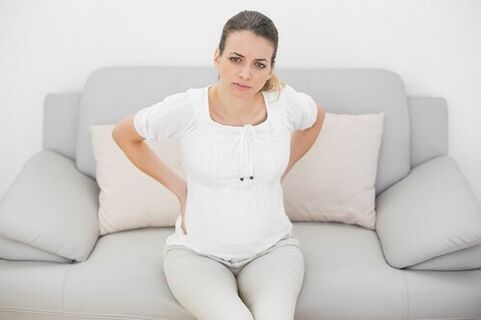
Pregnant women complain of aching pain during the second half of pregnancy.These manifestations are due to an increase in body and abdominal weight with the growth of the fetus.In this case, muscle tension occurs in the lower back, which causes a moderate painful reaction.
Sharp
Acute pain syndrome is a consequence of pathological conditions:
- injuries - bruises, spinal subluxations, compression fracture;
- hypothermia;
- lifting heavy objects;
- sharp slopes.
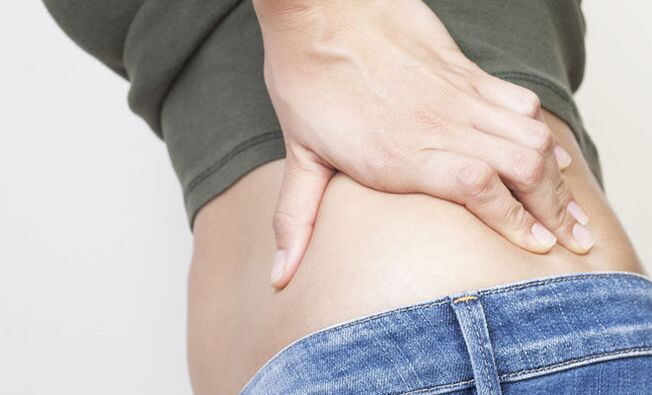
Acute pain can be caused by renal colic.To clarify the etiology and effectively eliminate the pain syndrome, a detailed diagnosis and a visit to a medical specialist will be required.
When should I see a doctor?
A visit to the doctor should not be postponed if the pain symptom does not stop for more than 3 days.A warning sign would be falling on your back, which could cause serious injury.The spread of the pain impulse to the buttock, thighs and lower legs should not be neglected.
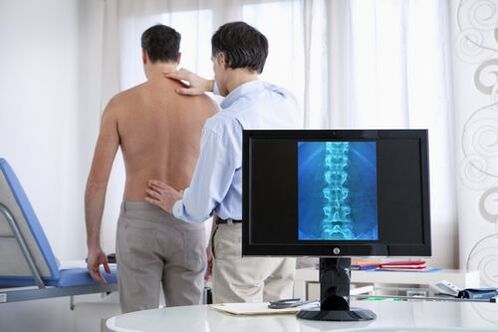
If there is a sensation of burning and tingling of the skin, loss of sensitivity in the legs, groin area, large nerves are involved in the pathological process.Severe cases lead to impaired urination and bowel movements.All of the above signs indicate a serious pathology that must be immediately diagnosed and treated.
Which doctor treats you?
The therapy of pain in the lower back is a complex task, the implementation of which requires consultation with highly qualified doctors.The initial diagnosis is made by a therapist who refers the patient to other specialists for consultation:
- to a traumatologist - if a back injury is suspected;
- orthopedist - for an examination of the joints and the entire musculoskeletal system;
- a vertebrologist who treats the spine;
- neurologist - to eliminate neurological symptoms;
- to a neurosurgeon if surgery cannot be avoided;
- rheumatologist - for autoimmune diseases.

If the functioning of the pelvic organs is disturbed, an additional examination by a urologist and a gynecologist for women is carried out.Therapeutic tactics for lumbar pain are based on a set of diagnostic results.
What to do if it hurts a lot: first aid
Non-medical actions are carried out in order to relieve the condition and maximally relieve the pain before seeking medical help.The first aid algorithm includes the following measures:
- Rest and bed rest, excluding stress on the lower back.To do this, the patient is placed on a hard surface.If a back injury is suspected, the victim is not allowed to move.
- Cold is applied to the affected area.To do this, use a heating pad with ice, chilled foods that are pre-wrapped in cloth to prevent hypothermia.The cold compress should be kept for no more than 15 minutes and reused after 3-4 hours.
- Severe pain is a direct indication to contact a doctor, so the patient should be taken to a medical facility as soon as possible.
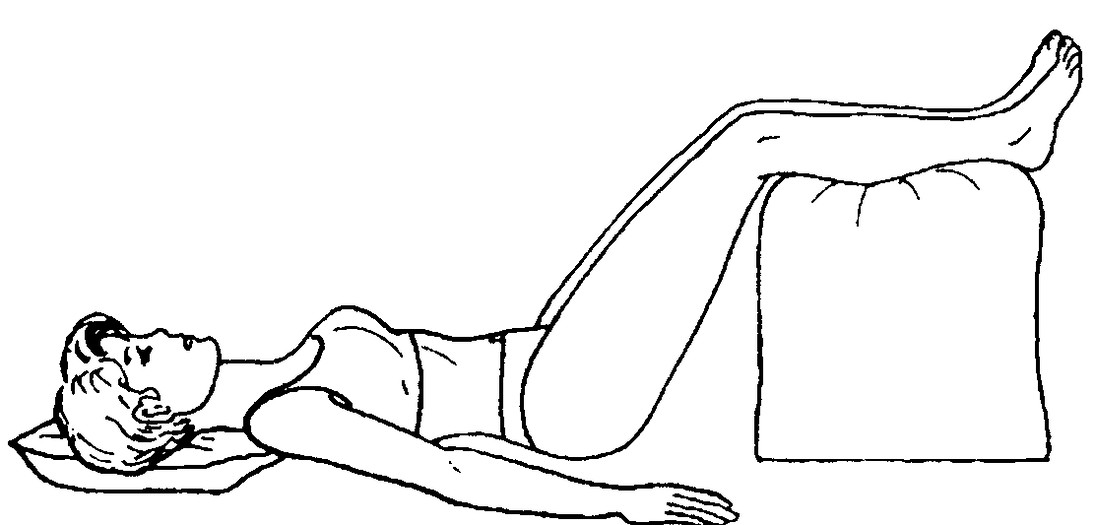
General and local anesthetics should be taken as prescribed by a doctor.Self-medication is dangerous to health and can lead to serious complications.
Uncontrolled use of analgesics dulls the pain, which complicates the diagnosis.In addition, with the development of inflammatory processes or acute conditions affecting the functioning of internal organs, the course of the disease worsens.
The best drugs
The most effective method of treating back pain is drug therapy.Medicines prescribed by a doctor not only relieve the pain symptom, but also eliminate the etiological factor.
Acute acute pain is blocked using local blockades performed by a neurologist or surgeon.At home, the means are used in the form of tablets, ointments or injections.
Tablets
The following drugs are prescribed for symptomatic treatment:
- Nonsteroidal anti-inflammatory drugs that effectively relieve pain and inflammation.
- Glucocorticosteroids when NSAIDs are ineffective.
- Muscle relaxants for pain caused by back spasms.
- Group B vitamins to improve the nutrition of muscle tissue and nerve cells.
- Chondroprotectors to inhibit degeneration in the joints and spine.
injections
Injection of drugs is prescribed in severe forms of the disease in order to achieve a quick therapeutic effect.Main criteria for using injections:
- the time before the onset of the therapeutic effect of the drug is reduced;
- the drug is not broken down by gastric juice;
- it is used in patients who have contraindications for taking painkillers.
Manipulation must be performed by a qualified specialist;self-administration of injections is not recommended.The choice of the drug and the prescription of its dosage is the responsibility of the attending physician, taking into account the degree of the disease and the presence of concomitant diseases.
Ointments
Topical treatments can help improve the condition at home.Depending on the active ingredient, the ointment removes pain, relieves swelling and inflammation:
- Anti-inflammatory drugs with an analgesic effect.
- Combined with anti-inflammatory, analgesic and anti-edematous effects.
- Ointments and creams with an irritating effect have a warming effect.
- Cooling medications to relieve pain.
When using warming agents for local treatment, it is important to remember that during inflammation and in the first two days after an injury, their use is strictly prohibited.
Plasters
This is the most convenient form of topical treatment.The advantage of patches is that you just need to stick them on the painful place and wait for the effect.As long as the product is on the skin, it is effective.List of the most effective patches:
- A patch containing an anesthetic that works well against inflammation and mild pain.It cannot be used for more than 5 days.The patch is valid for 12 hours.
- NSAID patch.It has an analgesic and anti-inflammatory effect.Use no more than 10 days.The effect of one patch is 24 hours.
How to treat at home
Therapeutic measures at home consist in strict compliance with the doctor's prescriptions.After passing the acute period, massage sessions are recommended to normalize muscle tone and improve blood circulation in the lumbar region.
Therapeutic exercises help to reduce pain, strengthen the muscle corset of the back and restore the mobility of the spine.The complex of exercises is selected individually by a physiotherapist, taking into account the general functional state and age of the patient.
Traditional medicine is used as an adjunct to the main treatment.Cabbage with honey has pain-relieving and anti-inflammatory effects.To do this, wash a leaf of white cabbage and smear it with liquid honey, then apply it to the sore spot.Fix the compress on top with cling film and cover with a warm blanket.The duration of the procedure can be up to 12 hours.
Vacuum massage cups are an effective treatment method that can be used at home.Thanks to the vacuum that occurs when using suction cups, blood circulation is enhanced, toxins are removed and congestion disappears.This leads to a faster recovery for the patient.
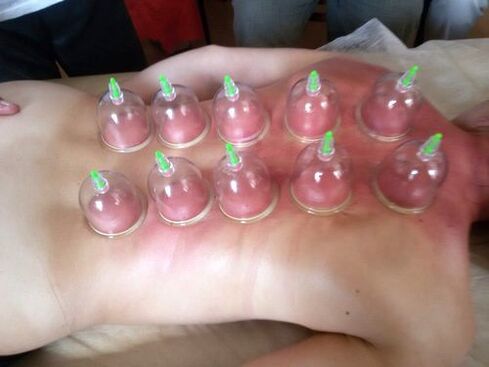
If you are serious about treating your lower back on your own, then physical therapy devices can greatly help you with this.With their help, many diseases of the musculoskeletal system can be cured in a short period of time.
Prevention
To prevent pain in the lower back, it is important to follow simple recommendations:
- eat right and lead an active lifestyle;
- engage in vigorous physical exercise;
- avoid heavy loads;
- conducting routine treatment of chronic diseases;
- wear quality shoes;
- correcting deformities of the spine and feet.
- If a pain syndrome appears, conduct preventive massage and exercise courses annually.
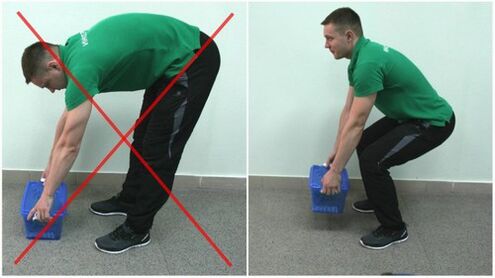
Whatever the cause, lower back pain cannot be ignored at any age.Most often, the pain symptom is a consequence of spinal pathology, chronic trauma or somatic disease.
When your back hurts in the lumbar region, an early consultation with a doctor will help you prescribe an effective treatment that will speed up recovery and restore back mobility.